The Practical Senior Living Guide

The Next Chapter of Living Begins Now

How to use this guide

There is a lot to consider when beginning the journey toward a senior living community. You’re faced with a lot of information and may be feeling some pressure. Our goal is to give you a complete framework of senior living as a whole—what to expect, how to approach the topic with family, and even the financial aspect of the transition.

No matter where you or your loved one ends up in the quest for a welcoming and inclusive community, we wish you peace and excitement on one of life’s most beautiful journeys. Enjoy the process. Trust the process. And, know you’ve made the right decision.


Section 1

Touring Guide

Beginning to explore senior living communities can be exciting, overwhelming, and sometimes a little scary. At Walker Methodist, we want to help you stay focused on the positive and maintain excitement as you begin to think about your transition.

What to Consider for Types of Care

One of the first steps in planning for senior living is determining what type of Walker Methodist care option will fit your needs and wants. Medical needs are an important aspect to take into consideration when transitioning to an assisted living community. You’ll first want to explore what types of senior living communities are available, as each type provides different services and levels of medical care. It’s also a good idea to speak with a doctor about the level of care needed.

Our care is personalized by residents and every person’s unique needs. We are equipped to help you with each and every stage of your life’s individual journey. Each of the options below differs in levels of support individuals can receive.

WM-Square-315x295_0001_Independent-Living

Independent living eases your burdens and grants you maintenance-free homes with access to unlimited social events. These apartment homes give you freedom and security to live as you always have. Additional services are always available when you’re ready for them.

WM-Square-315x295_0007_Assisted-Living

Assisted living communities are equipped with healthcare and personal services 24 hours a day, as needed, for each resident. If you need specific assistance with medication or rehabilitation type activities, you can have peace of mind while still participating in a wide array of programming and socialization.

WM-Square-315x295_0010_Memory-Care

Memory care is a distinct form of senior care for residents with Alzheimer’s or other forms of dementia. Staff members attend to residents’ needs with medication, bathing, and grooming.

WM-Square-315x295_0009_Transitional-Care

Transitional care, short-term, and respite care are available for individuals recovering from surgery, illnesses, or injuries. Physical, occupational, and speech therapies help assist in recovery and the transition back to your home.

WM-Square-315x295_0003_Longterm-care

Long-term care provides comfort and supervision with the option to participate in social events and residential dining, as funded by Medicaid.

WM-Square-315x295_0000_Continuing-Care

Continuing care retirement communities combines independent living, assisted living, and skilled nursing homes in a tiered approach to the aging process.

Retirement communities offer housing complexes designed for older adults.

Programs

Kaleidoscope Memory Care

Kaleidoscope Memory Care. Delivering the best care possible to those with memory loss requires creative and innovative programming. Walker Methodist’s Kaleidoscope Memory Care program uses proven therapies that allow residents to live each day with joy and peace.

FITNESS CENTER

Our fitness centers offer specialized HUR equipment designed for people 55+. We also offer a variety of interactive exercise routines and program classes for seniors.

PARKINSON’S CARE

In partnership with the Struthers Parkinson’s Center, Walker Methodist team members, nurses, and caregivers are pleased to provide expert Parkinson’s care.

SPIRITUAL LIFE

Our on-site chaplains provide support and services to all, regardless of their religious, non-religious, or spiritual path. We do this as a way of nurturing the whole person in body, mind, and spirit, with the understanding that the three are interwoven.

SENIOR DENTAL CLINIC

Our on-site dental clinic provides high-quality oral care with state-of-the-art equipment to help you achieve optimal oral health.

Amenities

amenity-laundry

Laundry

amenity-transportation

Scheduled Transportation

amenity-concierge

Front Desk Concierge

amenity-trash-removal

Trash Removal and Water

amenity-gardening

Community Gardening

Things to Think About

  • Having the right amenities and services can help you or your loved one truly feel at home and live a fuller life, free of hassle and stress.
  • There are often various meal plans and menu options available depending on the community you choose.
  • The community you choose should give you the opportunity to do something you love or learn something new every day.
  • Consider the programs and amenities offered at each community that could be your potential new home.
  • Many communities offer a diverse calendar of social events including art classes, pet visits, fun excursions, musical entertainment, and more.

Locations

Once you’ve opened the discussion with your loved ones, considering your medical needs, you can begin to look at the locations of various senior living communities. Think about what area would be preferable. Decide whether staying in a familiar suburb is important to you or if being closer to a family member, child, or friend takes precedence.

The level of care needed may narrow down your location options. However, it’s still good to consider where things like doctors, church, and family are in relation to your potential new home. Maybe there’s a desire to live in a different state or climate; would making a transition to a new area be something to consider?

Like all decisions throughout this process, it’s essential to be honest, realistic, and open about what a good location would be and any possible impact (positive or negative) it could have on those involved.

Walker Methodist map_2022

A. Care Suites
Edina | 952.835.8351

  • Assisted living
  • Care suites
  • Memory care
  • Respite care

B. Rusheba Station, Landing
Rush City | 320.318.2720

  • Independent living
  • Assisted living
  • Memory Care

C. Health Center
Minneapolis | 612.827.5931

  • Transitional care
  • Long-term care
  • Long-term memory care

D. Highview Hills
Lakeville | 952.985.9000

  • Independent living
  • Assisted living
  • Care suites
  • Memory care
  • Respite care

E. Kenzie
St. Anthony | 612.781.0755

  • Affordable housing

F. Lyndale
Minneapolis | 612.869.8484

  • Affordable housing

G. Place
Minneapolis | 612.827.8500

  • Independent living
  • Assisted living

H. Plaza CityView, Gardens
Anoka | 763.453.7125

  • Independent living
  • Assisted living
  • Care suites
  • Memory care
  • Respite care

I. River
Anoka | 763.421.0434

  • Affordable housing

J. Westwood Ridge I and II
West St. Paul | 651.259.2701

  • Independent living
  • Assisted living
  • Care suites
  • Memory care
  • Respite care
  • Transitional care

K. Levande
Cambridge | 762.325.0100

  • Assisted living
  • Memory care
  • Independent living
  • Respite Care

L. Eastwood Senior Living
Mora | 320.679.2916

  • Assisted living
  • Memory care

M. Pioneer Manor
White Bear Lake | 651.429.8585

  • Affordable housing

N. Havenwood of Onalaska
Onalaska, WI | 608.615.4700

  • Independent living
  • Assisted living

O. Lake Place
Chanhassen, MN | Coming soon!

Questions to Ask

Care Options

  • What types of help and care are available? (Bathing, help in and out of bed, laundry, etc.)
  • Are you skilled to handle behavioral health challenges? (Depression, Alzheimer’s disease, anxiety, etc.)
  • How do you determine what personal care assistance is needed?

Residential Life

  • What makes this community different from others?
  • How many residents are part of this community?
  • What is the lifestyle like in a senior living community?
  • Whichever community I choose, would I like to have involvement, socialization with friends and family, and assistance from Walker Methodist team members and volunteers?
  • Are there specific visiting hours?
  • How are apartments chosen?
  • Do we make the selection or do you?
  • Is there a waiting list? If so, do you charge a fee to be on the list?

Safety

  • What interior and exterior safety precautions do you have in place?
  • What precautionary measures do you take to prevent falls?
  • Is there the option to have daily “I’m OK” check-ins? What kind of system is in place for residents?

Quality of Life

  • What outdoor and courtyard areas are available for use? Do you assist residents if/when they wish to go outside or can residents do so on their own?
  • How do meals and dining services work?
  • What social activities or life enrichment programs are available? (Bingo, card games, movie nights, craft groups, spiritual groups, etc.)
  • Do you measure resident satisfaction? If so, how often?

The Team Members

  • What qualifications do team members and care providers have?
  • What are the hours that team members are available?
  • How will team members get to know the residents?
  • Who owns and manages this community?

Section 2

Financial Planning

Once you and your loved ones have decided on the type or style of senior living that suits your needs and the levels of care you’d like, it’s time to think about paying for it.

Everything You Need to Know About Financial Planning for Senior Living

There are numerous ways to afford your move, from using personal funds to government benefits to private sources. While this may seem like a daunting process, Walker Methodist’s housing professionals walk beside you through the journey and can help make sense of all the options. Personal funding sources can include:

  • Your regular income from retirement plans, pensions, annuities, and Social Security
  • The sale of stock or bonds
  • The equity in your current home or real estate
  • Assistance from your family
  • Life settlement from the sale of an insurance policy, or converting the plans into cash

Next, consider whether or not you qualify as part of a special interest or special needs group. Typical groups that people can qualify for include Veteran assistance and HUD (Housing and Urban Development) senior housing subsidies. Other important components of financial planning for seniors are listed below.

WM-Square-315x295_0002_Elder-Law

Elder law attorneys focus on the legal needs of seniors. They handle general estate planning issues and counsel clients about planning for incapacity with alternate decision-making documents, like living wills and power of attorney. They can help you plan for possible long-term care needs, establishing your transition plan, and navigating your choices for communities. Having an elder law attorney will help you with peace of mind, ease your family’s worries, and protect your financial interests and assets.

WM-Square-315x295_0005_Medicare

Medicare is a federal health program administered by the U.S. government. It provides health insurance coverage for people over 65 and those with certain disabilities. Seniors who receive Social Security benefits before age 65 are automatically enrolled in Medicare – however, it is only coverage that extends to hospital charges, physicians’ charges, and outpatient treatment. Medicare does not pay for “custodial care” which is care for individuals who need assistance with daily activities such as bathing, dressing, eating, and transferring to chairs or beds.

WM-Square-315x295_0006_Medicaid

Medicaid is a jointly funded, federal-state health insurance program for low-income and high-need people. Depending on the situation, it covers children, seniors, disabled, and others who are eligible to receive federally assisted income programs like Social Security or welfare. Medicaid coverage benefits for long-term care are very limited, paying only for skilled care deemed “medically necessary.” In short, seniors must have exhausted all other assets – depleting all their funds and selling any assets before Medicaid will consider coverage for senior living.

WM-Square-315x295_0004_Veteran_s-Assistance

Veteran’s assistance is financial assistance for assisted living for veterans in the form of a pension called the Aid and Attendance Benefit. This program can provide up to approximately $2,000 per month in assistance; however, eligibility is complicated and there can be extensive wait times for approval.

One last consideration for financial assistance is government housing programs for seniors from HUD, the U.S. Department of Housing and Urban Development. HUD housing has specific requirements for qualification. For individuals 62 and older, they must have very low income (50% of area median) to be considered for the subsidy.

Checklist for Senior Living Budgeting

Most assistance programs determine eligibility based on an individual’s resources. In other words, the longer a person resides (or is projected to reside) in a senior living community, the more assistance options become available to them. As a way to approach the subject of senior living financial planning, go over this checklist.

Prepare an Expense Sheet

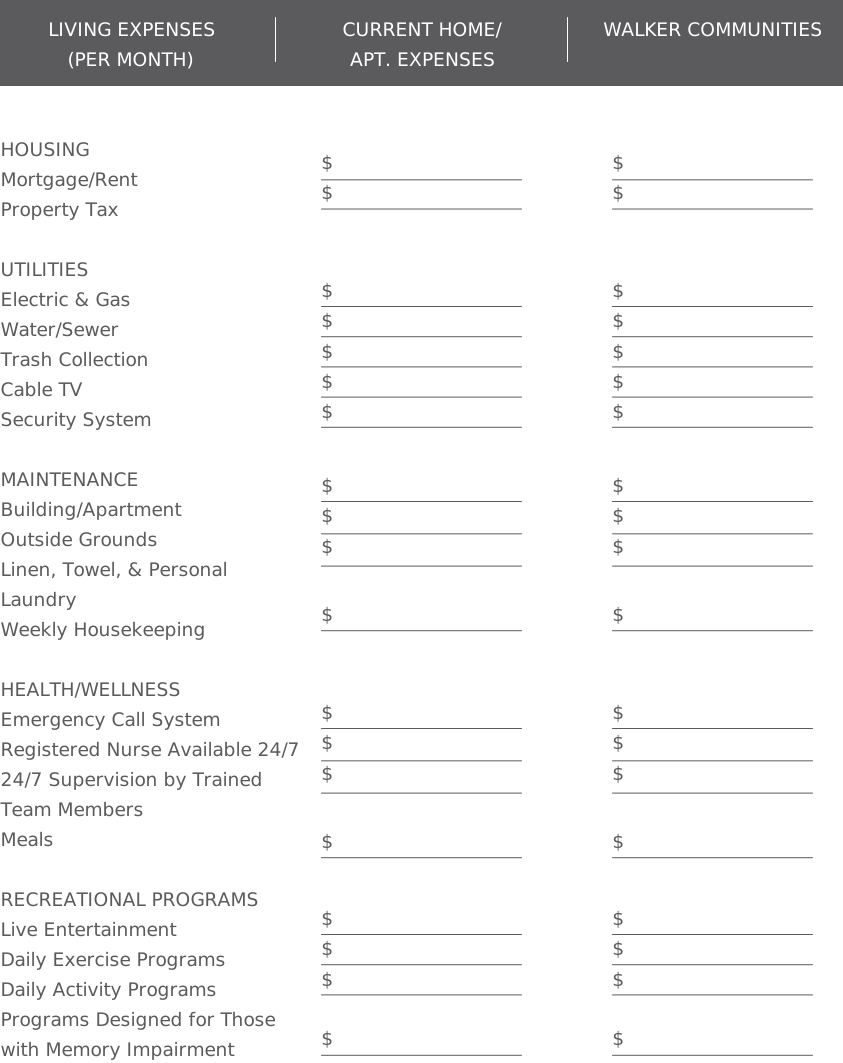
See Walker Methodist’s Monthly Cost Worksheet below. This includes all your monthly income and expenses. It will provide a good handle on expenditures and highlight potential areas that can be cut down or eliminated.

Update Your Estate Plan

It’s common for seniors to draft a will and then leave it sit. This mistake often means seniors’ estates go to the wrong people or their families incur extra legal fees. Revisit your will and other estate planning measures on a regular basis–we recommend yearly–to ensure beneficiaries and estate executors remain constant, as desired.

Assess Your Debt

If you still owe on your home or have medical or credit card debt, look into programs to consolidate payments.

Walker Methodist Monthly Cost Worksheet

The cost comparison worksheet is designed to provide help for estimating the monthly costs of senior living versus your current home. Not all items may be applicable to your situation. The items below are included in our monthly base rate.

cost comparison worksheet

(download the checklist)

*Inquire at each community. Possible monthly charges: beauty shop, incontinence supplies, telephone service, medications, and health & beauty products. For a full comparison of all Walker Methodist communities, please visit our locations.


Section 3

Transition

Change can be hard. Moving to a senior living community is one of the biggest challenges in our lives. Fortunately, there are ways to make the process smoother and easier for everyone involved. Here are six steps that we've found help to ease the transition.

Tip 1: Have an Open and Honest Discussion

tip 1

Before any decisions plan to have an open, honest discussion between all parties involved. It’s important that those involved—siblings, spouses, children, and anyone supporting the move—be included. Depending on the situation, it may be good to include any physicians in this discussion, or at least chat with them beforehand to gain any additional insight or suggestions.

Whether you’re the one moving or the one supporting the move, do your best to ensure that this discussion does not come as a surprise to those involved. This is a great opportunity to discuss thoughts and plans for the future. It’s a chance to ask questions and discuss what each of your concerns are so you’re on the same page.

Consider meeting in a relaxed and familiar setting so that no one feels uncomfortable or out of their element. Emphasize that this conversation is about advocating for the health, safety, and well-being of the person moving. It’s important that you work together and approach the conversation as a united team, with their (or your) best interest as a priority. Do your best to keep an open mind and speak in a way that’s gentle but direct.

Tip 2: Meet the Team Members

Tip 2

Now that you’ve narrowed down your options, meeting with team members at prospective communities will help you get a feel for the atmosphere and get to know those you may be interacting with on a day-to-day basis.

Before you go, jot down your questions or potential situations for team members that you’d like their perspective on. As the saying goes, there are no dumb questions. If something comes up during a discussion, tour, or while you’re researching – feel free to ask! Team members should understand the process and know that it may be a challenging one; they are the frontline support system to residents (and if they don’t seem supportive or willing to answer questions, that’s a good sign that you may not want to live in this community).

Common Questions:

  • What’s your team-to-resident ratio?
  • What’s the community like?
  • What types of activities and amenities are there?
  • How is healthcare supported?
  • How does billing work?

Tip 3: Find Social Interests

Tip 3

An active and positive social life is vital to both mental and physical health. A common worry from children and families is that their parents or loved one will stay secluded in their apartment all day and not meet others. At the same time, part of the transitional period for many people involves needing alone time to reflect and adjust. Everyone will handle the social aspect of senior living differently.

When preparing to transition to a community, think about what’s important to you about your social life. Many senior communities offer a variety of amenities, classes, outings, and activities.

Ask about things like:

  • How social are the other residents here?
  • Are pets allowed?
  • What social activities are offered?
  • What are the most/least attended social activities here?

tip text

Tip 4: Create and Uphold a Schedule

Tip 4

Creating and maintaining a schedule provides a sense of routine, as well as things to look forward to. The schedule should include regular visits from family and loved ones, as well as social activities and hobbies in the new senior community.

Balance is important here. Keeping in regular touch with loved ones is an essential part of a successful transition. At the same time, visits from friends and family that are too frequent can lengthen the adjustment process. A balanced schedule will allow for social time with fellow residents and other interests that can be enjoyed regularly in your new home.

Example schedule:

  • Join friends for coffee and breakfast
  • Take a walk or exercise
  • Use the transportation to attend an event
  • Lunch
  • Visit and socialize
  • Enjoy music
  • Dinner

Tip 5: Focus on the Positives

Tip 5

While it’s easy to feel guilty about the decision to move to a senior community, it’s important to try and focus on the positives, too. This time can cause anxiety and guilt for seniors and their loved ones alike. If one person is feeling down, the others may pick up on those emotions. As we’ve said before, you don’t want to ignore or downplay any concerns or difficult feelings - but it may also help to try to support each other in remaining optimistic.

One of the most important positives of this transition is the peace of mind everyone gets from knowing that the person transitioning is living in a safe community. Also, knowing that he or she is being properly cared for according to medical needs and is in an encouraging and friendly atmosphere is another crucial positive.

  • Being surrounded by a wonderful team and other residents makes for a positive living space.
  • Having access to physical, occupational, and /or speech therapy can greatly benefit as well as support you or your loved one in many positive ways.

Tip 6: Leave ‘Home’ Behind, the Right Way

Tip-6

Many seniors will find it helpful to make time to say farewell to their past living situation. Having some sort of closure can help ease you into the next stage without it feeling too abrupt or rushed.

Assist in the packing if you’d like to. When you’re part of this process, you’ll be able to better make decisions on what’s important to keep, what to take with, and what was once enjoyed but no longer needed. Being in control and having choices fosters a sense of identity and comfort. If you can make the moving process a positive one, you can focus on all the good times you had there and cherish those memories in the new residential community.

Along the way, discuss any feelings of grief, stress, vulnerability, loss, excitement, and being overwhelmed. Try not to downplay this situation. Moving is a big deal, especially if it means leaving a family home behind. Recognize that this may be one of the biggest changes experienced. It’s important that this situation is given the proper time and consideration it needs for each individual situation; take breaks, don’t rush, and try to enjoy the process as much as possible.

Need some assistance with packing?

Click here to get access to a helpful packing list for moving to a senior living community.

What to Expect

The process of transitioning to a senior living community will be different for every individual; some may feel settled after a few days or weeks, while others may take months to really feel comfortable and adjusted to their new home. Give yourselves the time and opportunity to make the decisions that are right for you, utilize the resources available to you, and to work through any issues as they arise.


Take the First Step

It’s been said that despite its inevitability, getting old is the one thing that seems to catch everyone by surprise. Life is a beautiful journey, and each and every phase is special and deserves to be celebrated.

At Walker Methodist, we believe age does not have to hold you back. That’s why we’ve created communities to ensure that it won’t. Places where you have the freedom to enjoy the activities and lifestyle that suits your needs; where our goal is to ease your burdens so you can live fully each and every day. To revel in those moments of joy and love and appreciate where you call home.

Begin your next (beautiful!) phase of life.

Consult a Housing Specialist

Who is Walker Methodist?

Walker Methodist is a faith-based organization proud of its deep roots dating back to 1876. Predecessors to today’s Walker Methodist communities are the Bethany Home and Harriet Walker Maternity Hospital.

Today we specialize in lifestyle, housing, and healthcare services for older adults. We own, operate, and manage housing communities; provide rehabilitation services; and operate leading transitional care centers that help people recover from hospitalizations or surgeries so they can return home.

We’ve built our communities around the values of respect, imagination, and collaboration. Our commitment to seniors began 75 years ago. Over the years, our commitment has only strengthened as the levels of care we offer our residents continues to evolve.

Our Mission

Life. And all the living that goes with it. Enhancing the lives of older adults through a culture of care, respect, and service.

our-values